
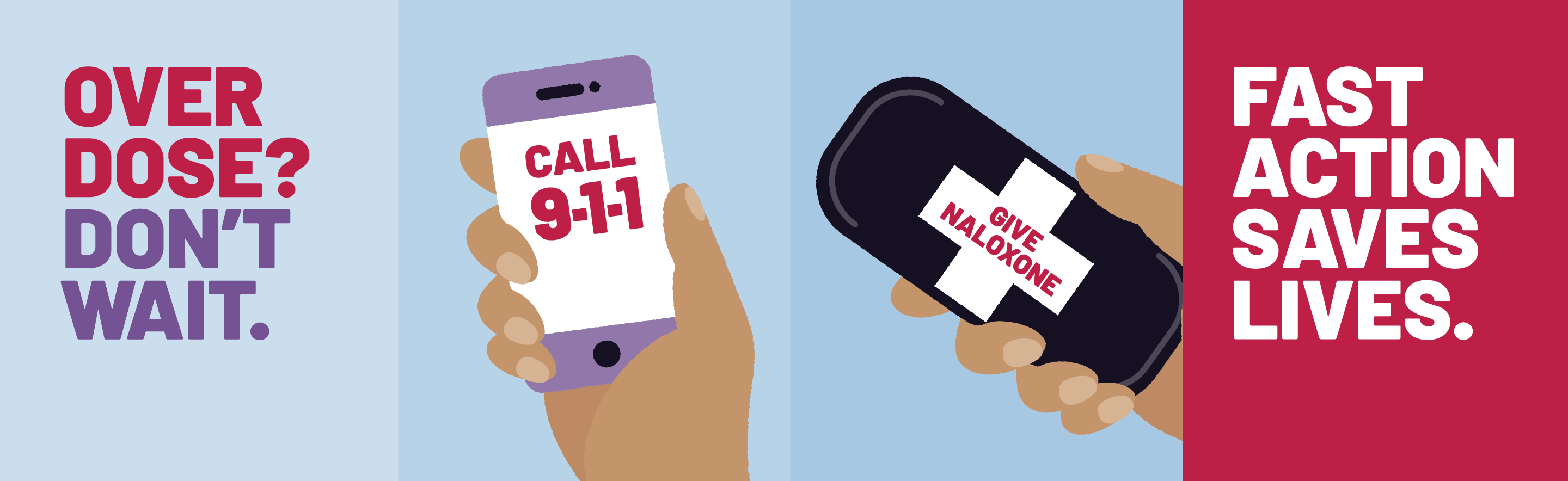
 If you suspect an overdose, call 9‑1‑1 right away.
Overdose prevention and response
The unregulated drug supply in B.C. is more toxic and unpredictable than ever. Any street drug can be poisoned, not just opioids. It can be hard to know what’s in the substances you’re taking. Even if they came from a source you trust, like a friend or roommate. Even if they look real or like a prescription medicine. Even if you only take a little, or if it’s your first time – the risks are real.
It’s important to know how to prevent, recognize, and respond to an overdose.
Recognize the signs of an overdose
Do you know how to tell when someone is having an overdose? Look for these signs and symptoms:

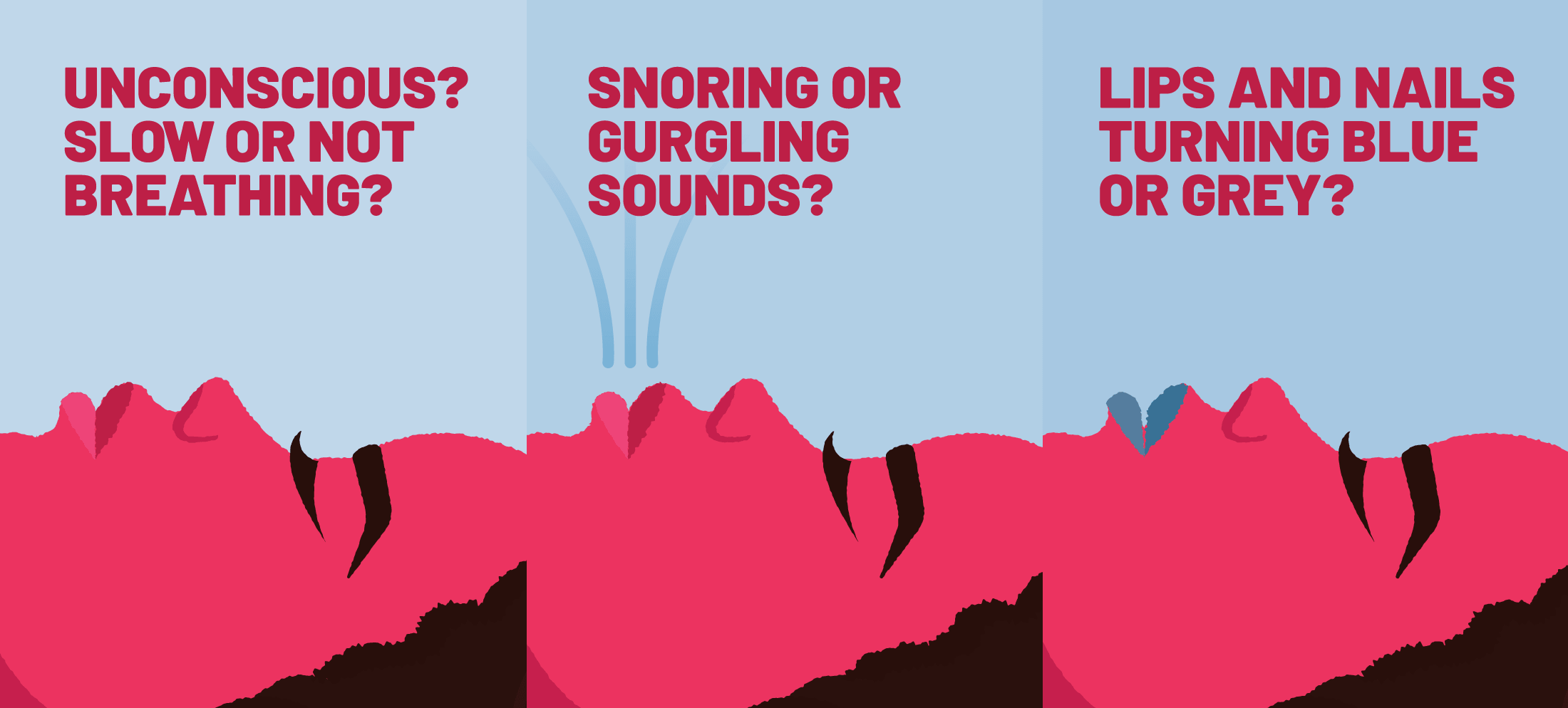
Slow or no breathing
This means less than 1 breath every 5 seconds

Not moving / Unresponsive
The person isn’t moving and can’t be woken up

Choking sounds
The person is making unusual sounds, like choking, gurgling, gasping or heavy snoring

Tiny pupils
The person’s pupils look tiny

Blue or grey lips
The person’s fingernails or lips are turning blue, grey or purple

Cold and clammy
The person’s skin feels cold and clammy to the touch
Respond to an overdose
If you experience or witness an overdose, call 9‑1‑1 right away. The Good Samaritan Drug Overdose Act protects people who call 9‑1‑1 about overdoses. Your positive action could save a life.
Call 9‑1‑1 first, and follow these SAVE-ME steps:

Stimulate
Try to wake the person. Call their name and squeeze their fingertips or the muscle between their neck and shoulder.

Airway check
Check if they are breathing normally and check for a pulse (heartbeat). Remove anything in their mouth that may be blocking their airway.

Ventilate (give rescue breaths)
Lift their chin and tilt their head back. Help the person breathe by pinching their nose closed and breathing into their mouth once every five seconds. You can use a breathing mask, found in take-home naloxone kits, if you have one.

Evaluate
Check if they are breathing normally (1 breath every 5 seconds). If not, get ready to give naloxone.

Medication
Give 1 dose of naloxone. Your kit may include a nasal spray or an injectable liquid. Follow the steps to administer it.

Evaluate and Support
Check breathing again. If they are still not breathing normally (1 breath every 5 seconds), give another dose of naloxone every three minutes until they are breathing normally. Keep in mind that naloxone only works for a while. If the drugs are still in the person’s system when the naloxone wears off, they may go back into overdose and need another dose of naloxone.

Aftercare
If the person is still unresponsive, put them on their side. Whether they’re responsive or not, stay with them until emergency services arrive. Naloxone wears off after 30 to 120 minutes and the overdose can return.
Overdose can have a big impact on witnesses and responders, too. If you respond to an overdose, make sure to take some time for yourself if you need it. You can call 310-6789 for emotional support in B.C. If you’re a student, you can also find support at Here2Talk.ca.
Ways to stay safer
Toxic drugs are the leading cause of death for people ages 19 to 39 in B.C. Use of any illegal drug poses risk and is never 100% safe. If you or someone you know uses drugs, it’s more important than ever to know the ways to stay safer.

Test your drugs
If you’re planning to use drugs, get them tested, even if you think you can trust your source. It can be hard to tell if drugs have unexpected substances in them, including prescription medications obtained outside a pharmacy. Drug checking can provide life-saving information about what’s really in your drugs and can help connect you with health services.
Visit a drug checking site to get your drugs tested.

Carry a naloxone kit
Carry naloxone and know how to use it. Naloxone is a drug that can reverse an opioid overdose from drugs like heroin, oxycodone, fentanyl, and morphine. Naloxone kits are available for free in B.C. They can be picked up without a prescription at locations across the province, including community pharmacies, no questions asked.

Call or text NORS
The National Overdose Response Service (NORS) is a virtual safe consumption site available to anyone in Canada. NORS is anonymous and judgement-free. Contact this confidential service 24 hours a day, 365 days a year.
Call or text 1-888-688-6677 for virtual support while using drugs.
Get help
If you or someone you know needs support with substance use or addiction, there are ways to get help.
Different supports work for different people, and no two journeys to recovery are the same. Watch people from B.C. tell their own stories of addiction and recovery.
Mental health and substance use supports
It can be challenging to find the help you need online. You may not know where to start. The HelpStartsHere website can help you find supports in your area for mental health and substance use, including supports for Indigenous peoples.
Treatment and recovery
Search for supports in your community. This includes intake, substance use/drug use services, counselling, mental health supports, crisis intervention, talklines, or peer-to-peer support.
Supervised sites
Sites where you can use drugs under supervision to prevent overdoses. Staff at these sites are trained to offer support without judging you and will keep your information confidential.
If you can’t access a site, use a virtual service like NORS. Call or text 1-888-688-6677 to speak with a trained peer while using drugs. If you become unresponsive, they can contact emergency responders to help you.
Foundry
At Foundry centres across B.C., young people ages 12 to 24 can access mental health care, substance use services, physical and sexual health care, youth and family peer supports, and social services in one place.
Here2Talk.ca
Connects students with mental health support. If you’re a student at a B.C. college or university (whether you’re from Canada or another country), you can get free, private counseling and community referrals. These services are available 24/7 through an app, phone, or website.
Call 8‑1‑1 for non-emergency help
For medical non-emergencies, call 8-1-1 to speak to a health service navigator, who can help you find health information and services.
Sign up for Toxic Drug and Health Alerts
Get anonymous alerts by text message when there are different or increased risks associated with unregulated substance use. Alerts are available in all health regions in B.C. To sign up, text the word JOIN to 253787 (ALERTS). Message and data rates may apply.